

 9 mins Read
  09/04/2025
 For the market outlook over the next 5 to 10 years, OEMs need to look beyond off-the-shelf systems to unlock greater design freedom, enhanced system performance, and long-term product value for a competitive edge.
After years of growth driven by subsidies, lifestyle trends and Covid-related demand, the electric two-wheeler market is entering a different phase. OEMs are now contending with higher inventory levels, slower turnover and price sensitivity. Many brands are still building around the same catalogue components, especially in drive systems and batteries – so product differentiation is narrowing. The result is a crowded market of bikes with similar frame architecture, similar performance and little room for distinction from one another.
As is often the case in overcrowded segments, price becomes the only clear differentiator. The challenge then, for many e-bike OEMs, is to rise out of the race to the bottom. Is custom battery design the answer? David Kaminski, thinks so:
“The battery is the single most influential component in an e-bike — not just for range or power, but for how the entire system performs, integrates and scales. Yet too often, it’s treated as a fixed element. The OEMs who take control of the battery design are the ones creating real product and brand advantage.”
— David Kaminski, Business Development Manager at ABT, formerly Head of Sales for Brose eBike Systems
Success now depends on OEMs taking back control, not just over product quality, but rider experience and brand identity. The era of simply assembling off-the-shelf components is over.
The Battery as a Strategic Differentiator
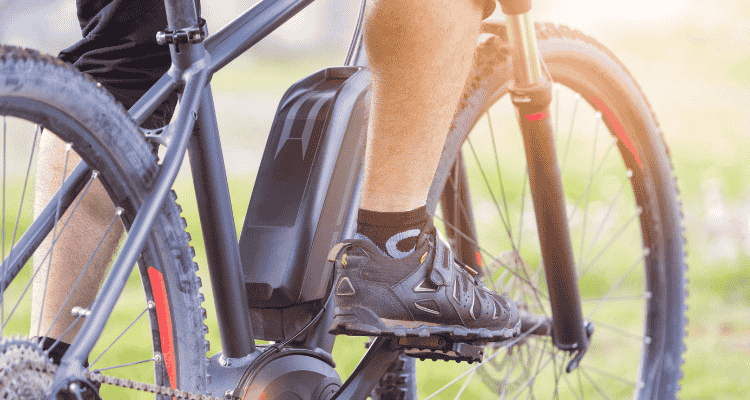
Batteries are no longer just power sources. Alongside the motor, the battery is one of the most influential components in an electric bike. It shapes performance, connectivity, aesthetics and serviceability. The selection of a battery pack can truly influence the perceived value of a bike in the eyes of its prospective rider, which can result in tangible reward for the OEMs who get it right.
More OEMs are realising that a custom battery pack gives back full control where standard off-the-shelf solutions have been prohibitive. The ability to align technical performance with product design without compromise provides OEMs with the opportunity to deliver a distinctive experience for their customers, and as such can directly influence brand integrity and trust. That means that working with the right battery partner can unlock valuable improvements in product value and market presence for the OEM. Adversely, OEMS that fail to harness this opportunity run the risk of being left behind and invisible players at the bottom of the market.
Making Design Work Harder
For many OEMs, designing a frame that works well with an off-the-shelf battery solution has meant compromising on the aesthetics. A custom battery pack opens up the opportunity for unique frame designs that the battery is tailored to fit, not the other way around as is the case for standard battery packs.
To some degree, the battery shape and size can be modelled through a choice of cell configurations, while the options for different colours, textures and enclosure materials are wide open. OEMs can make clear design statements which would not be possible with a standard battery pack, and these can become recognisable brand elements. The result is a more coherent and deliberate bike design with a clearer link between technical function and design intent.
Bike Performance, Handling & Ride Comfort
The choice to develop a custom battery brings about obvious design advantages, but this isn’t a case of style over substance. In parallel to having full design control, the OEM also takes back the chance to determine how the bike handles, what performance features it possesses and ultimately the rider’s experience once the product hits the road.
Battery weight and placement have a major impact on how a bike rides. A customised pack can be designed around low-centre-of-gravity layouts, specific frame geometries and optimised material choices.
Careful cell placement and lightweight housing help to create bikes that feel stable and responsive. Standard battery formats rarely account for this level of detail, which limits the OEM’s ability to fine-tune the ride. Customisation allows OEMs to enhance ride comfort, agility, and user confidence which provide a hallmark of quality and builds trust in the market, in turn, enhancing brand equity.
A custom battery also gives the OEM more control over range. Choosing cells with higher energy density and a more efficient use of space mean range can be extended without compromising frame design. For OEMs offering multiple models or categories of bike, optional dual-battery configurations or modular range extenders can be integrated from the outset, offering flexibility and economies of scale without redesign.

Power for Smart Features and Enhanced Functionality
As two-wheelers become more connected, the battery must do more than supply power. It must interact with drive systems, controllers, displays, apps and third-party accessories. Custom packs support clean integration across communication protocols like CAN bus, UART and BLE.
This reduces reliance on adapters, helps ensure system reliability and simplifies diagnostics. The end result is a smoother and more convenient user experience as well as reduced friction across OEM, dealer and rider touchpoints – A clear product advantage in the eyes of time-short bike riders who have come to expect a seamless experience from their everyday tools and gadgets, bicycles included.
Today’s riders expect more than range and recharge speed from their e-bike battery. Features like GPS tracking, anti-theft systems, smart lighting and interactive HMIs are all becoming standard and placing demand on the battery pack.
Custom packs can manage loads more intelligently and include firmware-ready BMS solutions that handle logic and prioritisation of power distribution more efficiently. This ensures a consistent user experience, even with multiple active systems in use.
A Critical Foundation for Safety
Safety is non-negotiable. For OEMs, it’s not just a technical requirement but a reputational one — especially as concerns around battery reliability and fire risk make headlines. In the UK, Transport for London recently banned non-folding e-bikes from the public transport network, citing fire safety issues; and in 2024, police in the Netherlands seized over 10,000 illegally modified electric bikes.
Incidents like these are shaping public and policymaker perceptions — often unfairly. Many of the bikes involved are poorly regulated imports or unapproved adaptations, yet they’re contributing to what could become a blanket mistrust of the category. In some regions, electric two-wheelers are starting to be treated more like unlicensed motorbikes than bicycles, with little consideration for how legitimate OEMs are working to build safe, reliable products.
Leading brands are recognising that safety is fast becoming a competitive differentiator and not just a risk to be managed. A custom battery pack allows OEMs to embed multi-layer protection, from cell balancing to advanced thermal propagation containment.
Designs should be built for environmental resistance, incorporating IP-rated casings and shock resistant properties, while supporting live diagnostics and remote monitoring. These features go far beyond the baseline protections offered by most generic packs and would help to build brand credibility.

A Modular Approach to a Custom Solution
While the value of customisation is clear, some OEMs understandingly hesitate at the idea of custom design as it is perceived to be costly or restrictive for future product development. But a custom battery pack doesn’t need to be a single-use solution. In fact, many OEMs are now adopting a platform-based approach, developing battery systems that can be deployed across different models with only minor adjustments.
A shared battery housing can support multiple cell profiles and configurations for different end-product variants, reducing development time, simplifying inventory and streamlining compliance. It also gives OEMs the ability to tier products or respond to market demand more flexibly without compromising on integration, performance or visual identity.
This approach unlocks the long-term value of a custom design, making it scalable across a wider product family while maintaining control over core specifications.
What Could the Future of Battery Design Look Like?
As the electric two-wheeler sector matures, battery technology will continue to develop — and OEMs that plan ahead will be better placed to respond. Working with a strategic battery partner allows manufacturers to assess the relevance of emerging technologies early in the development cycle, from new chemistries like silicon-anode or solid-state cells to structural integration or charging innovations.
Standard packs often lag when it comes to adopting new features, while custom development gives OEMs the option to lead the way. A forward-looking approach to battery design can help ensure future readiness and protect long-term competitiveness as expectations shift and technology moves on.

From Component to Competitive Advantage
Custom battery design is no longer just a premium upgrade, it’s becoming a core part of product strategy for OEMs navigating a saturated and price-sensitive market. As this article has explored, batteries influence more than performance and range; they shape how a bike looks, handles, connects, and evolves.
From ride quality to smart features, safety systems to serviceability, the benefits of taking ownership of battery architecture are clear. And with platform-based designs and modular options, custom solutions no longer mean complexity. Has the e-bike market now reached the point where the long-term benefits of a custom battery outweigh the short-term cost savings of standard solutions? Ebike OEMs with a long-term vision to succeed must think strategically about how the battery fits into their future product portfolio, and the impact it can have on product viability and lifecycle.
From Design to Delivery
Alexander Technologies works closely with OEMs to develop custom battery systems that align with both technical goals and broader product strategy. Our role goes beyond design and engineering as we deeply understand the market and all suitable technologies, we help navigate the full process, from regulatory compliance and certification through to mass production, shipping and long-term support.
With years of experience across sectors and applications, we understand the hurdles that come with battery development. Our team offers practical guidance at every stage, helping reduce complexity, avoid delays and bring greater confidence to the decisions that matter most.